
Education Series
Key Measurements in High-Performance Data Centers
As data centers grow more power-dense and operationally complex, measurement is not longer optional, it’s foundational.
Rack densities averaged 8 to 10 kW five years ago and are now routinely hitting 20 to 30 kW. GPU clusters are pushing well past 50 kW. Cooling infrastructure built for the last generation is handling loads it was never designed for, and in most facilities, the measurement layer has not kept up.
The problem is not hardware. It is visibility. Operators managing chilled water loops, CRAH units, and direct liquid cooling systems have solid data on each individually, but no unified picture of how they interact under load. That gap shows up in elevated PUE, unexpected hot spots, overcooled zones wasting energy, and carbon reports requiring manual assembly.
Metering the full cooling chain, from cooling tower basin to rack-level BTU meter, is how that gap closes.
Why Integration Matters
In high-density environments, cooling systems operate as interconnected networks.
• Chillers and cooling towers manage heat rejection.
• Utility loops distribute chilled water.
• Technology loops deliver cooling directly to racks.
• Fan systems manage airflow containment & distribution.
Each layer depends on the one above it. A degraded CHW flow rate elevates coil leaving-air temperatures. Higher supply-air temperatures compress containment margins and drive up IT inlet conditions. Without coordinated measurement across all four layers, the result is elevated PUE, unexpected hot spots, stranded capacity, and carbon numbers nobody can stand behind.
Bridging Air and Water: A Unified Strategy
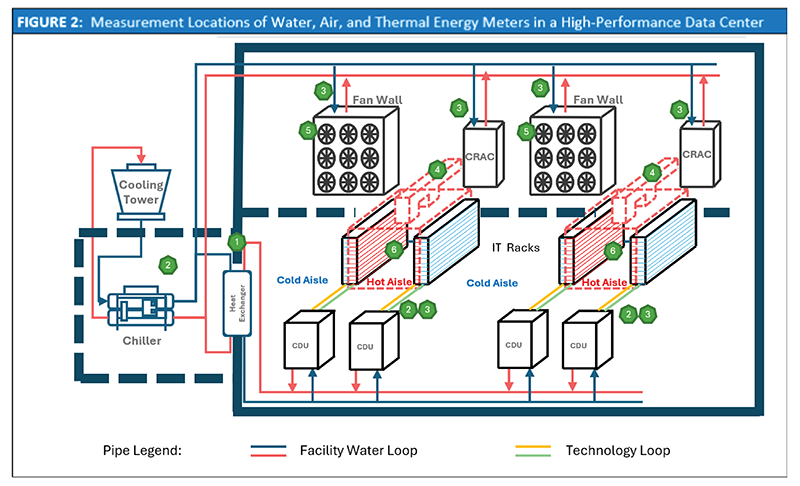
Effective optimization requires measurement points aligned precisely with the cooling system architecture, from cooling towers and chillers to primary and secondary CHW distribution headers, and down to rack-level airflow. Each stage provides essential operational data. This is where ONICON insertion flow meters and BTU meters are installed, providing operators with real-time delta-T and flow data at every thermal hand-off.
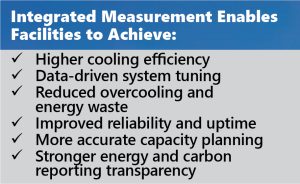
When airflow and CHW measurements are unified, facilities achieve lower PUE, closed-loop system tuning, elimination of overcooled zones and the energy waste that comes with them, improved reliability, and capacity planning built on actual thermal load data rather than estimates.
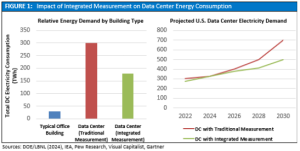
Power density is rising. Cooling systems are becoming more dynamic. Compliance standards are tightening. Energy accountability is expanding. The path forward is not simply more cooling; it is measurable high-performance cooling. By integrating airflow and hydronic measurement solutions, operators gain the visibility needed to manage complex thermal ecosystems with precision.
ONICON & Air Monitor deliver the tools to measure, integrate, and optimize every layer of your cooling infrastructure.
Water & Thermal Energy Measurement
Delivering Cooling Efficiently

System-1000 Flow & Energy Measurement System 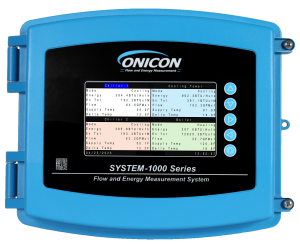
Location: Heat Exchanger Equipment
The System-1000 is ideal for heat-exchanger equipment and utility-level energy tracking. It provides comprehensive real-time thermal energy intelligence by:
• Calculating cooling energy (BTU/hr or kWh)
• Tracking coil performance and identifying fouling or valve issues
• Logging energy consumption data for long term analysis
• Monitor efficiency of heat exchanger linking facility water and technology loops

FT-3400 / FT-3200 Electromagnectic Flow Meters
Location: Facility Water Loop
These meters deliver precise chilled water flow measurement at the utility loop, providing the accuracy required for stable and efficient plant operation.
• Measure chilled water flow rates
• Support chiller staging optimization
• Identify pump, valve, or flow irregularities
The SYSTEM-1000 uses this flow meter data to provide accurate energy measurement to improve and maintain overall cooling performance.

System-40 BTU Measurement System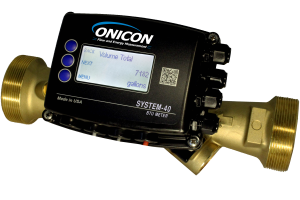
Location: Technology Loop
Focusing on technology-loop flow and energy allocation, the System-40 delivers:
• Energy measurement for pods, rows, in row coolers, and rear door HEX
• Tenant/subsystem cost allocation chargeback/showback
• Insights for load diversity and downstream capacity planning
Where the SYSTEM-1000 supports plant-level energy analysis, the SYSTEM-40 brings that visibility down to the rack and row-level cooling delivery points.
Airflow Measurement
Managing Containment and Temperature Distribution

ELECTRA-flo Thermal Airflow Measurement System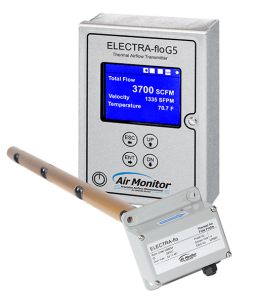
Location: IT Racks Supply & Return Ducts (to and from hot/cold aisles)
Providing accurate airflow measurement for supply and return duct systems, the ELECTRA-flo supports
• CRAC/CRAH airflow verification
• Containment balance across hot and cold aisles
• Identification of airflow shortfalls or bypass conditions
This is essential for verifying coil performance and maintaining proper airflow paths in high-density environments.

FAN IV – Fan Array Transmitter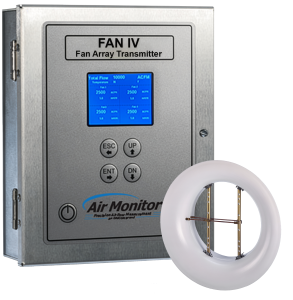
Location: Fan Inlet/Thermal Wall (per fan array section)
Built for HVAC fan applications, the FAN IV enables:
• Independent fan airflow and DP measurement
• Grouping of multiple fans under shared VFD control
• High-accuracy performance across varying loads
• Detect underperforming fans, filter loading, or blockages
• Optimize fan speed (VFD setpoints) for energy savings
For fan arrays and supply/return systems, accurate fan tracking ensures the cooling delivered matches the thermal demand.

DCAS – Data Center Aisle Sentry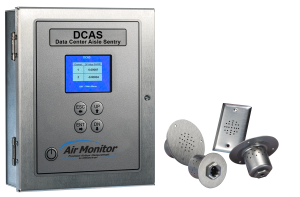
Location: Aisle Containment (hot vs cold)
The DCAS focuses specifically on aisle pressurization and containment stability by:
• Monitoring aisle pressure differentials
• Preventing hot air backflow into the cold aisle
• Ensuring consistent temperature distribution
• Supporting stable containment performance without oscillation
By stabilizing pressure between hot and cold aisles, DCAS improves airflow predictability and overall cooling efficiency.
The ONICON Advantage
ONICON delivers precise measurement solutions for data center airflow and hydronic systems. Our integration expertise provides actioanble visibiity, enabling you to optmize efficiently, allocate accurately – and plan confidently.